Mayo Clinic Overview of Sudden Cardiac Arrest
Sudden cardiac arrest (SCA) is the sudden loss of all heart activity due to an irregular heart rhythm. Breathing stops. The person becomes unconscious. Without immediate treatment, sudden cardiac arrest can lead to death.
Emergency treatment for sudden cardiac arrest includes cardiopulmonary resuscitation (CPR) and shocks to the heart with a device called an automated external defibrillator (AED). Survival is possible with fast, appropriate medical care.
Sudden cardiac arrest isn’t the same as a heart attack. A heart attack happens when blood flow to a part of the heart is blocked. Sudden cardiac arrest is not due to a blockage. However, a heart attack can cause a change in the heart’s electrical activity that leads to sudden cardiac arrest.
Symptoms
Symptoms of sudden cardiac arrest are immediate and severe and include:
• Sudden collapse.
• No pulse.
• No breathing.
• Loss of consciousness.
Sometimes other symptoms occur before sudden cardiac arrest. These might include:
• Chest discomfort.
• Shortness of breath.
• Weakness.
• Fast-beating, fluttering or pounding heartbeat called palpitations.
But sudden cardiac arrest often occurs with no warning.
When to see a doctor
When the heart stops, the lack of oxygen-rich blood can quickly cause death or permanent brain damage.
Call 911 or emergency medical services for these symptoms:
• Chest pain or discomfort.
• Feeling of a pounding heartbeat.
• Rapid or irregular heartbeats.
• Unexplained wheezing.
• Shortness of breath.
• Fainting or near fainting.
• Lightheadedness or dizziness.
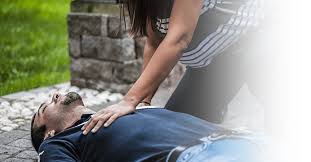
If you see someone who’s unconscious and not breathing, call 911 or local emergency services. Then start CPR. The American Heart Association recommends doing CPR with hard and fast chest compressions. Use an automated external defibrillator, called an AED, if one is available.
How to do CPR
Do CPR if the person isn’t breathing. Push hard and fast on the person’s chest — about 100 to 120 pushes a minute. The pushes are called compressions. If you’ve been trained in CPR, check the person’s airway. Then deliver rescue breaths after every 30 compressions.
If you haven’t been trained, just continue chest compressions. Allow the chest to rise completely between each push. Keep doing this until an AED is available or emergency workers arrive.
Portable automated external defibrillators, called AEDs, are available in many public places, including airports and shopping malls. You also can buy one for home use. AEDs come with voice instructions for their use. They’re programmed to allow a shock only when appropriate.